0151 639 8273
Mon - Fri 9am - 5pm


Care proceedings are one of the most sensitive and challenging areas of family law. If you or a loved one is involved in such a process, it’s essential to understand the steps, rights, and legal obligations involved. At Burd Ward Solicitors, we specialize in providing compassionate and expert legal advice in care proceedings to ensure the best possible outcomes for children and families.
Care proceedings are initiated by a Local Authority when they have serious concerns about a child’s safety or well-being. This legal process begins when the Local Authority believes that a child is at risk of significant harm, and it involves the family court deciding what is in the child’s best interest.
This can involve the child being subject to a Care or Supervision Order.
The primary goal of care proceedings is to protect the child, but the court also considers the rights of the parents and wider family members.
Care proceedings are usually initiated in response to concerns such as:
The Local Authority has a legal duty to ensure that children in their area are safe. Before initiating care proceedings, they can often work with families through a process called pre-proceedings. This is an opportunity for parents to address the concerns raised, usually with the help of a solicitor, as funding is available for this. The aim of pre- proceedings is to prevent the matter going to Court.
However, if these efforts are unsuccessful, or the matter requires urgent attention then the Local Authority may issue Care Proceedings. They will ask the Court to make an Interim Care Order. An Interim Care Order gives the Local Authority temporary overriding parental responsibility whilst in proceedings.
At the end of proceedings, the Court will be invited to determine if there is a need for a Final Order to be made, which could be either a Care Order or a Supervision Order.
A Care Order gives the Local Authority shared parental responsibility for the child, allowing them to make decisions about their care.
A Supervision Order, on the other hand, allows the child to remain with their parents under the local authority’s supervision.
As a parent, it’s essential to know that you have rights during care proceedings:
Care proceedings usually follow these stages:
The entire process is designed to be completed within 26 weeks to minimize disruption to the child’s life. However, in complex cases, this period may be extended.
At Burd Ward Solicitors, we understand how stressful and emotional care proceedings can be for parents. Our experienced team provides clear, professional, and empathetic advice tailored to your circumstances. We will guide you through each step of the process, ensuring that your rights are protected and that the court hears your side of the story.
We are committed to achieving the best possible outcome for your family, working with you and other professionals to resolve issues as smoothly and quickly as possible.
Care proceedings are complex and emotionally challenging, but with the right legal support, you can navigate the process confidently. If you are facing care proceedings or have concerns about your child’s welfare, contact Burd Ward Solicitors for expert advice and representation.
Our expert family law solicitors are here to help you. Call us at 0151 639 8273 or email us at familyteam@burdward.co.uk.

Probate is a crucial legal process that occurs after a person passes away. It involves validating a deceased person’s will, identifying and appraising their assets, settling debts and taxes, and distributing the remaining property according to the will or, if there is none, according to intestacy laws.
Derived from the Latin word probare, meaning “to prove,” probate refers to the administration of a deceased person’s estate under English law. This process ensures that all legal, financial, and personal matters are handled appropriately after someone’s death. Key steps include:
One of the primary purposes is to confirm the authenticity of the deceased’s will. This validation is vital for ensuring the will adheres to legal standards and reflects the deceased’s true wishes. Without probate, disputes regarding the will’s validity may arise, potentially leading to protracted legal battles among heirs.
Probate formally appoints an executor responsible for managing the estate. This official designation is essential, as it establishes clear authority to handle the deceased’s affairs, preventing confusion and delays in settling the estate.
The process includes compiling an accurate inventory of the deceased’s assets. This inventory ensures that all property is valued correctly, which is necessary for tax assessments and equitable distribution among beneficiaries.
Before any assets can be distributed, outstanding debts and taxes owed by the deceased must be settled. Probate ensures that creditors are notified and given the opportunity to claim their dues, while also guaranteeing that the appropriate taxes are paid to avoid future legal complications.
After debts and taxes are settled, probate oversees the distribution of remaining assets according to the will or, in the absence of one, according to intestacy laws. This legal oversight ensures that the distribution is fair and compliant with the law.
While probate can appear complex, it is designed to provide a clear and structured method for managing a deceased person’s affairs. It offers legal protection to both beneficiaries and the executor, ensuring that all steps are completed in accordance with the law.
In some instances, it may be possible to avoid probate. Certain assets, such as jointly held properties or specific types of pensions, may not require probate. Consulting with a legal professional can provide valuable insight into whether probate will be necessary for a particular estate.
Probate is an essential process that involves validating wills, appointing executors, inventorying assets, paying debts, and distributing property. While it may seem cumbersome, its role is vital in ensuring legal clarity and honouring the deceased’s wishes.
If you have questions about the process or need assistance with an estate, don’t hesitate to contact our dedicated team at Burd Ward Solicitors on 0151 639 8273. Our experienced team is here to guide you through every step, ensuring a smooth transition for you and your loved ones.

When you embark on the journey of buying or selling property, one of the key components you’ll encounter is conveyancing. Whether you’re a first-time buyer or a seasoned investor, understanding conveyancing and its importance is crucial for a smooth transaction.
Conveyancing is the legal process of transferring property ownership from one person to another. It encompasses all the legal and administrative work associated with transferring the title of the property. The process involves several stages, including:
For a more detailed look at the conveyancing process please see our dedicated buying and selling guides.
Conveyancing is a critical part of any property transaction for several reasons:
Conveyancing ensures that all legal requirements are met, protecting both the buyer and the seller. Your conveyancer will verify that the seller has the legal right to sell the property and will ensure the buyer doesn’t inherit any legal issues or encumbrances.
The various checks and searches conducted during conveyancing help identify potential risks such as boundary disputes, planning restrictions, or environmental hazards. Identifying these issues early can prevent significant problems down the line.
By ensuring the correct transfer of funds and registration of the property with the Land Registry, conveyancing protects the financial interests of both parties. It prevents instances of fraud and incorrect payment allocations, which could have severe financial repercussions.
Conveyancers handle the complex paperwork, communicate with the other party’s conveyancer, and resolve any issues that arise, ensuring a smooth transaction process. This helps to eliminate stress and provides peace of mind to both buyers and sellers.
Property transactions are subject to stringent regulations and legal requirements. A professional conveyancer ensures that your transaction complies with all relevant laws, safeguarding you against future legal challenges.
For sellers, conveyancing ensures that any existing mortgages or property-related debts are settled before the transfer of ownership. This ensures that the buyer receives a property free of encumbrances.
If you are looking to buy or sell a property and would like a quote, please contact us on 0151 639 8273 or email us at info@burdward.co.uk.
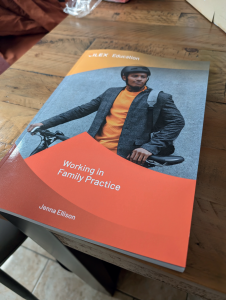
Jenna Ellison, Head of Family Law at Burd Ward Solicitors has had a text book published. The text book is aimed at CILEX students, but is available for all to purchase.
Working in Family Practice begins by introducing some key family law themes and then discusses the important issue of funding of family law proceedings. The course book then goes on to review the law relating to marriage and civil partnerships. The law and procedure for divorce and dissolution of a civil
partnership is then explained and the differences with judicial separation are outlined. The rights of cohabitants when relationship ends are also reviewed. Next, the book discusses Private Law Children, focussing on the application of the Children Act 1989 to the resolution of disputes between parents. Public Law Children is explained and the role of the state in child protection cases is described. Finally, the course book reviews the law relating to domestic abuse, including the requirements of the Domestic Abuse Act 2021.
This course book is suitable for paralegals and junior staff working in family practice teams, as well as for junior legal staff working in child protection teams in local authorities.
Jenna has been working with CILEX in varying roles over the last year. The Journey to creating this book started over five years ago. Jenna began teaching Level 3 Family Law and Level 6 Family Practice with The Law Academy, based in Liverpool. “I really enjoying teaching, I am really passionate about family law and teaching allows me to pass on this passion with the lawyers of the future”.
Jenna then got involved with CILEX directly with the apprenticeship program. Jenna has assisted in the development of what the role of an apprenticeship would involve, what they generally be involved with assisting a family team. In addition, creating example portfolios so that training providers are assisted with the standards expected.
This role lead to involvement with other programs. Jenna was then commissioned to assist with the syllabus drafting
and exam writing. This naturally led onto Jenna being commissioned to edit the text book that sat along this program. “It has been a real honor to write this text book, I was once told everyone has a book inside them, little did I know, mine would be a family law text book”.
Jenna Ellison, a solicitor and head of our family law department re-joined Burd Ward Solicitors in 2022 having initially trained with us back in 2015.
A lecturer and author, Jenna brings with her a wealth of experience and knowledge from her previous experience working in a city firm to the Family department. Jenna has previously represented both males and females who have been victims of domestic violence and has supported them obtaining orders to protect not only their own safety, but that of their children and home.
Jenna is also very experienced in dealing with Private law proceedings where there is a dispute between the parents regarding where the children should live and when they should spend time with the non resident parent. Jenna’s experience representing children have allowed her to assist both parents come to a child focused arrangement. Jenna has also had experience acting for both Fathers and Mothers when children have not been returned and offers an approach that is timely and professional.
For assistance in all aspects of of family law please contact Jenna Ellison on 0151 639 8273 or by emailing her directly at je@burdward.co.uk
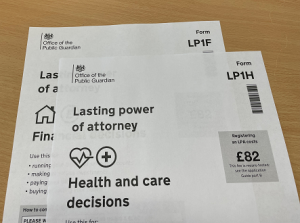 In life, preparation for the future is as crucial as managing the present. At Burd Ward Solicitors, we understand the significance of forward-thinking, especially when it involves legal matters that affect you and your loved ones. A critical component of such planning is understanding and setting up a Lasting Power of Attorney (LPA).
A Lasting Power of Attorney is a legal document that allows you to appoint one or more people (known as ‘attorneys’) to make decisions on your behalf. This arrangement becomes particularly important if you become unable to make your own decisions due to reasons such as illness, an accident, or diminished mental capacity.
There are two types of LPAs in the UK:
Creating an LPA involves several steps, including choosing your attorney(s), filling out the relevant forms, and registering the LPA with the Office of the Public Guardian. It’s essential to consider who to appoint carefully, as they will have significant control over your affairs
At Burd Ward Solicitors, we specialise in providing expert advice on LPAs. We can guide you through the process, ensuring that your LPA reflects your wishes and is legally robust. Our team can help with:
A Lasting Power of Attorney is a vital legal tool that ensures your affairs are managed according to your wishes, even when you are not in a position to make decisions yourself. At Burd Ward Solicitors, we’re committed to guiding you through this crucial process with sensitivity, professionalism, and expertise.
For further information or to arrange an appointment, please contact us on 0151 639 8273.
As the festive season approaches, we at Burd Ward Solicitors wish to extend our warmest greetings and thanks to all our clients and partners.
With the holiday spirit in mind, we also understand the importance of spending quality time with family and friends. Therefore, we have adjusted our opening hours to reflect the season’s joy.

We’re delighted to hear that Kash Mahmood a solicitor and the legal aid supervisor in our family law department has been re-accredited to the Law Society’s Children Law Accreditation scheme.
The Law Society’s Children Law Accreditation is a recognised quality standard for practitioners representing children in children law proceedings.
The accreditation covers all types of children law work and is recognised by the Legal Aid Agency.
It’s a way for clients and professionals (such as guardians) to choose a qualified practitioner when a child needs representation.
Kash Mahmood, a solicitor in our family law department joined Burd Ward in June 2022 following the merger of his firm Solicitorhelp.com. Kash has been a solicitor for over 25 years and has been a member of the Law Society’s Children Panel for the last 20 years. He specialises in Child Care cases, dealing with sensitive and often complex proceedings brought by social services and the courts where there are concerns about the care offered to a child or children.
Outside of work Kash is deeply involved with St John Ambulance regularly volunteering his spare time to them. Most recently he completed the Northumberland Coast Mighty Hike for Macmillan Cancer Support raising over £1,300 for the charity.
For assistance in all aspects of of family law please contact Kash Mahmood on 0151 639 8273 or by emailing him directly at km@burdward.co.uk
We’re happy to announce that Jenna Ellison, a solicitor and head of our family law department has received the Law Society’s Children Law Accreditation
The Law Society’s Children Law Accreditation is a recognised quality standard for practitioners representing children in children law proceedings.
The accreditation covers all types of children law work and is recognised by the Legal Aid Agency.
It’s a way for clients and professionals (such as guardians) to choose a qualified practitioner when a child needs representation.
Jenna Ellison, a solicitor and head of our family law department re-joined Burd Ward Solicitors in 2022 having initially trained with us back in 2015.
A lecturer and author, Jenna brings with her a wealth of experience and knowledge from her previous experience working in a city firm to the Family department. Jenna has previously represented both males and females who have been victims of domestic violence and has supported them obtaining orders to protect not only their own safety, but that of their children and home.
Jenna is also very experienced in dealing with Private law proceedings where there is a dispute between the parents regarding where the children should live and when they should spend time with the non resident parent. Jenna’s experience representing children have allowed her to assist both parents come to a child focused arrangement. Jenna has also had experience acting for both Fathers and Mothers when children have not been returned and offers an approach that is timely and professional.
For assistance in all aspects of of family law please contact Jenna Ellison on 0151 639 8273 or by emailing her directly at je@burdward.co.uk
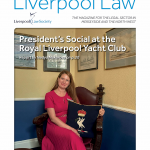 Congratulations to our own Nadya Makarova, who made the front page of the Liverpool Law Society magazine, August edition. You can read the latest issue online here.
Nadya joined Burd Ward in November 2021 and heads our property team. With over 20 years’ experience dealing various property transactions including sales, purchases and refinancing as well as complex titles, high value transactions, first registrations and lease matters. Being bilingual, Nadya is able to assist clients from many Eastern European countries in addition to the local clients.
Nadya also handles some commercial property matters. If you would like Nadya to assist you in your Conveyancing transaction please call us on 0151 639 8273 or email her directly at nm@burdward.co.uk
 The theme for this year’s International Women’s Day is #DigitALL. It raises the issue of innovation and technology for gender equality.
Here at Burd Ward we also celebrate the women’s achievements and contributions that they make to the running of the business. We strive to support the innovation of the women that work within and support our business. Equally, we extend this to our clients also.
In the area of family law there is much to be celebrated in terms of significant milestones in family law which supports the progression of women’s equality and innovation. We acknowledge that there are still barriers to women being able to access the technology they need to progress, and we support all efforts made to rectify this.
Baroness Hale has been a champion for the rights of women and marginalized groups, and she has used her position to advocate for greater equality and access to justice in family law. Her contributions to family law have helped to shape the legal landscape in the UK and have had a significant impact on the lives of many individuals and families; a prominent legal scholar and jurist who has made significant contributions to the development of family law in the United Kingdom; she was appointed the first lady to the Law Commission and the first female law lord. Throughout her career, A key moment which highlights her dedication towards the equal rights of women was when she wore a coat of arms which read “women are equal to everything” in Latin at the House of Lords in 2004.
Baroness Hale was also involved in several notable family law cases during her tenure on the Supreme Court. In 2018, she delivered the leading judgment in the case of Owens v Owens, which concerned the grounds for divorce in England and Wales. In this case, she argued that the law on divorce needed to be reformed to allow for no-fault divorce, as the existing system was outdated and unnecessarily punitive.
In relation to this is the progress towards gender equality through the recognition of women’s right to divorce. The area of divorce has seen key changes in terms of the bias towards men, as originally, women were denied the right to divorce, and their marriages were often viewed as contracts that could not be broken. Women who sought a divorce were often stigmatized and faced social ostracism. The recognition of women’s right to divorce has given women the freedom to leave unhappy or abusive marriages and start afresh.
At Burd Ward we work in collaboration with charities such as Wirral Women and Children’s Aid and Tomorrow’s Women to assist women being able to access legal assistance.
We at Burd Ward Solicitors celebrate the achievements of gender equality and expansion of women’s rights in their totality.